Struggles of the Kentucky Pioneers
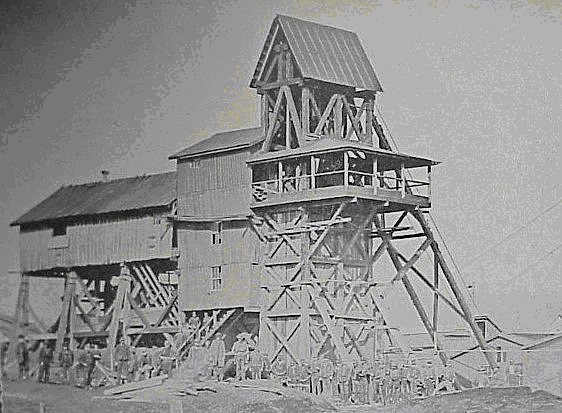 The life of the Kentucky pioneer and backwoodsman was one of long and bitter struggle. His task was to hunt, clear the forest to plow, and to fight local Indian tribes. Small forts, or stations were established to help resolve local conflicts with the savages being driven from their hunting grounds. The pioneers were of necessity armed, and were their own soldiers. They built forts and fought under commanders which the community had chosen. The mode of warefare somewhat resembled that of the Indian, and was quite different than the old European-style of both sides queuing up in a field and shooting at one another. The early pioneers fought the enemy from ambush. There was no court system, thus, the backwoodsman was prompt to avenge a wrong. He was grimly stern back woodsman who loved his freedom, and easily swayed by stormy passions. The atrocities suffered at the hand of the Indians taught him to relaliate in kind, thus, in this way he was cruel an relentless towards his enemy. After hostilities with the Indians came to a close, development of towns in the mountains was slow, and the woods remained isolated and cut off. Not until the railroads spread their iron network through the mountains, tapping an almost inexhaustible coal veins and mineral deposits, did the frontiersmen emerge into the business of coal-mining.
 Index to Kentucky Wills and Estates



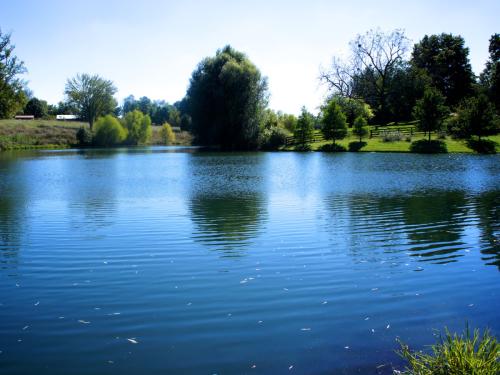
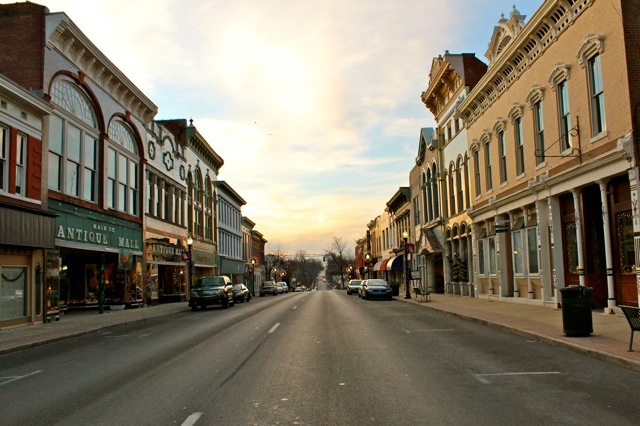
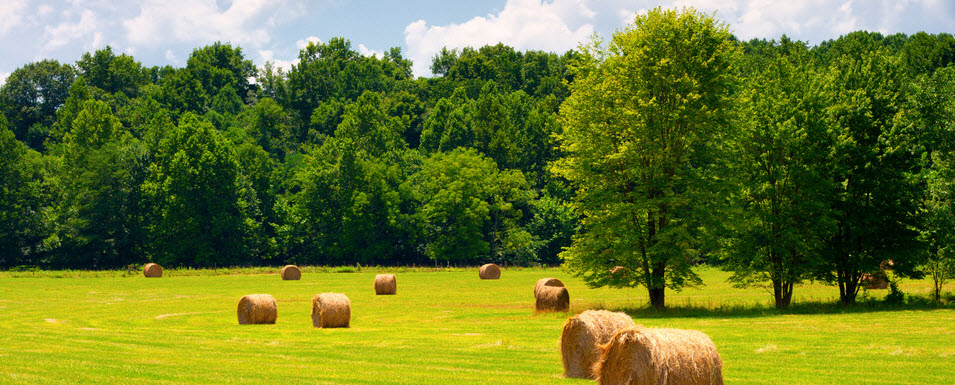
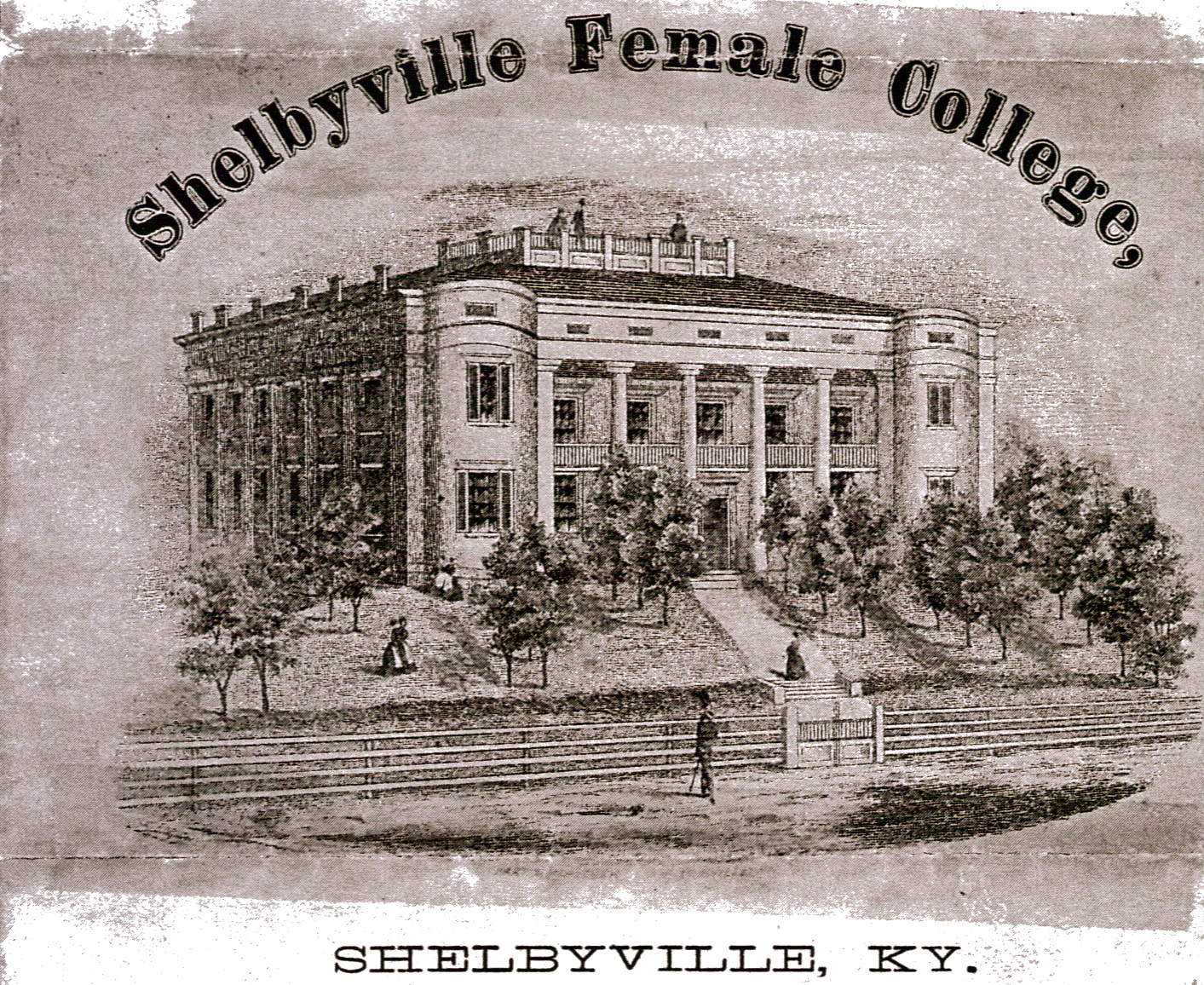 Shelby County was formedn 1792 and was named for Isaac Shelby, the first Governor of Kentucky. The county seat is Shelbyville.
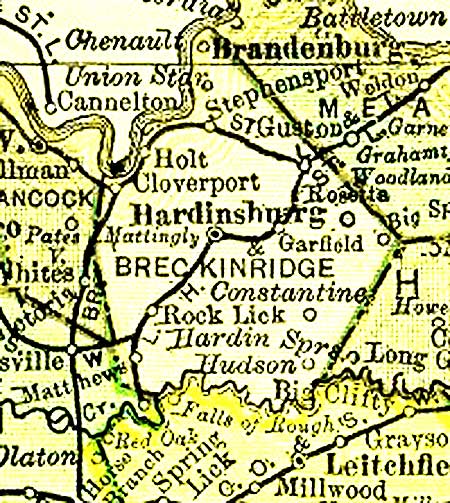

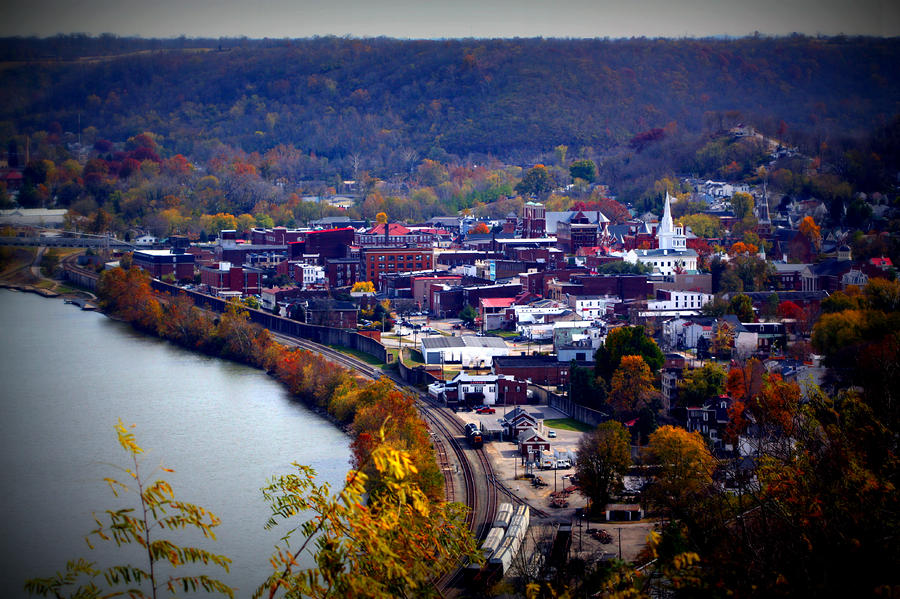
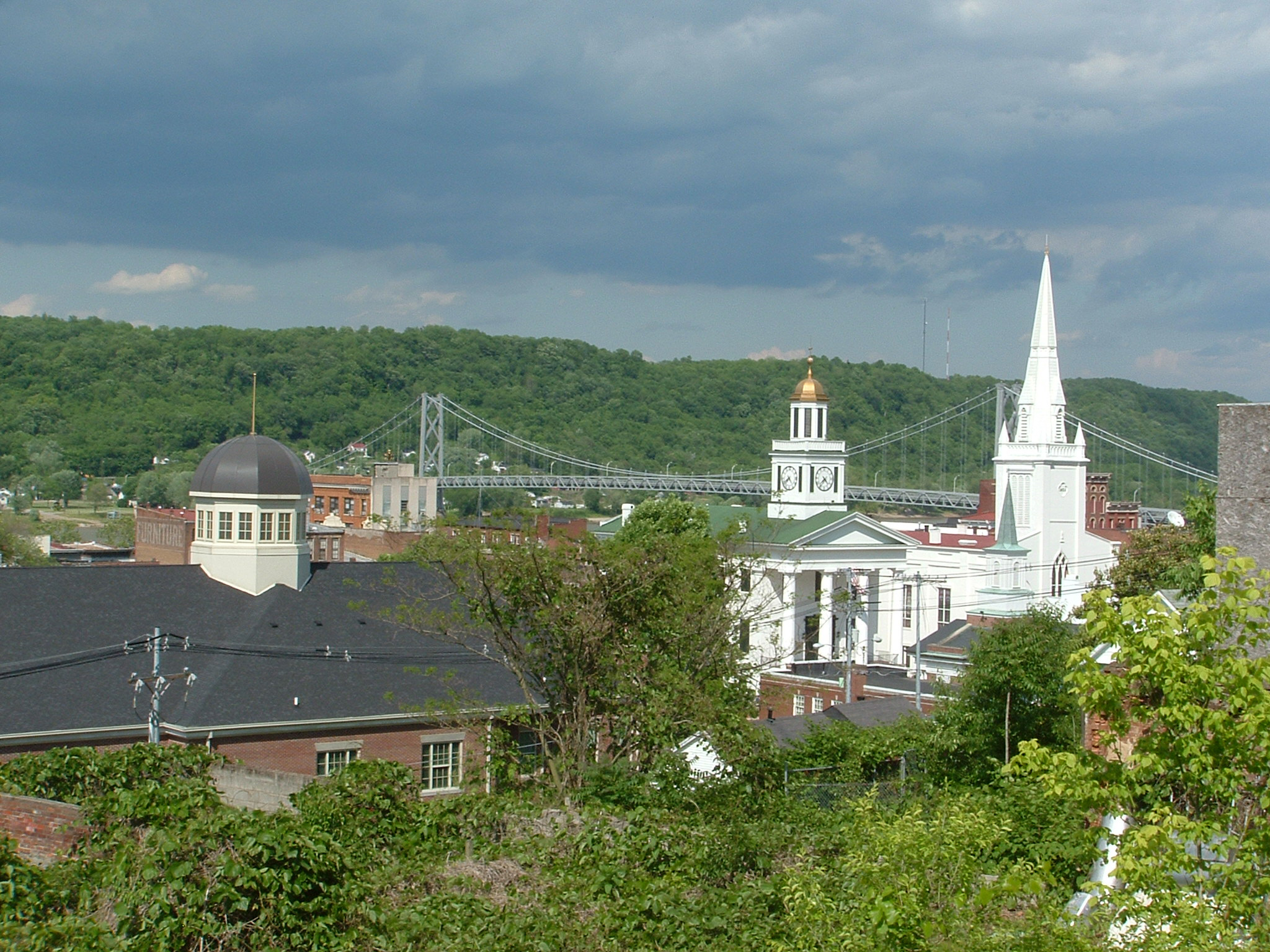
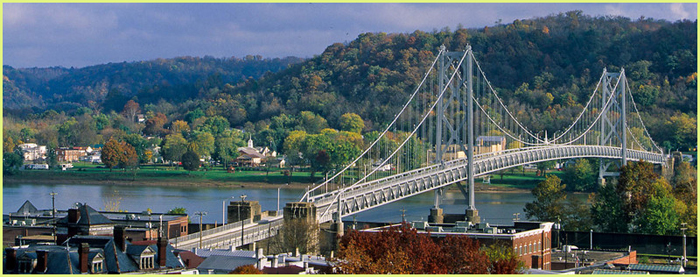 Mason County was taken from Bourbon County in 1788 and was named for George Mason, a Virginia delegate to the U.S. Constitutional Convention. The county seat is Maysville, which is situated on the edge of the outer Bluegrass Region. The depositions regarding matters of land of the froniersmen Simon Kenton and Daniel Boone are found in the early records, copies of which are on this website.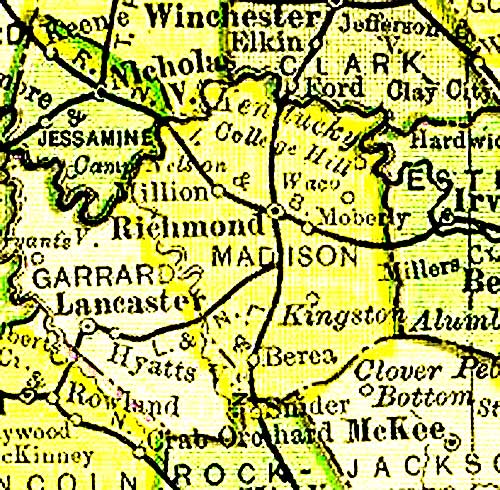
 Lincoln was one of the original three counties formed from a county in Virginia called "Kentucky County". Three counties were separated from Virginia to form the Commonwealth of Kentucky in 1792; viz: Fayette, Jefferso and Lincoln Counties. The county seat is Stanford, Kentucky.