Genealogy Records in Alabama, Georgia, Kentucky, North Carolina, South Carolina, Tennessee and Virginia
Get More Genealogy Real Estate

![]() | JOIN 8 Genealogy Websites |
Kentucky Genealogies, Court House Records, Revolutionary War Pensions, etc. online. Kentucky Pioneers
Get More Genealogy Real Estate
![]() | JOIN 8 Genealogy Websites |
Some genealogies are simply too entangled to unravel. And if many people are descendants from the same group of ancestors and adding their two-cents, it may seem impossible to separate relationships. One issue of large families is when that the first-born children reach maturity they could easily be considered the parents of the last-born siblings! Especially if we have John Sr. and John Jr. And then John Jr. names a son John. Whose John Sr. and John Jr.? A careful separation of the generations is indicated. The popularity of using the same name for several generations is helpful, however, if that name is rather unusual. The last several hundred years, it was popular to incorporate the surname of the parents and grandparents into the first names of the children. This fact should not be overlooked, for sometimes that is the only reasoning available to solving the problem. Get More Genealogy Real Estate
![]() | JOIN 8 Genealogy Websites |
How far back do the records go? All genealogical research needs to be as legitimate as possible and each generation should be verified in order to avoid getting on the wrong track. You can possibly find your ancestor reference in 1066 in the Domesday Book. This was in the days of William the Conqueror when he required a complete listing of all residents in order to tax them. Expect to find a simple reference, without family information. The name is good enough to establish that person as a resident in 1066 A. D. The best hope of accuracy, however, occurs to about 1500, the era when parish records were being kept in England. The old Irish records did not survive, and there is very little on Scotland. However, from the 1400's (you might find a 1400 entry in some parish registers) through the 17th century, the religion was in upheaval. William VIII broke off from the Catholic Church and established the Anglican religion. This is what you will mostly find so far as parish records are concerned. I cannot tell you . . . more . . .| SPECIAL GENEALOGY OPPORTUNITY NOW for yourself and friends!
$7 (auto expires after 1-month) Try it out now to see if you can find your ancestors |
|
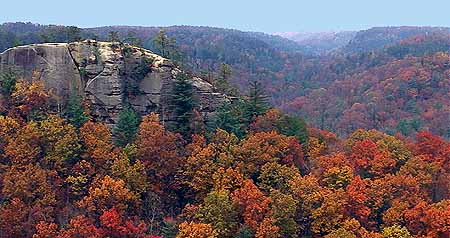
The Red River Gorge
Even before the Cherokee, Chickasaw, Shawnee and Yuchi were removed from Kentucky, there were European settlers. Counties were not formed until after the American Revolutionary War. Thus, in wilderness regions, the genealogist must really dig to locate old colonial forts and militia records. My personal procedure is to read every page of the tax digest in the county where my ancestor resided, recording the description of acreage, number of acres, names of neighbors, waterways, district, etc. (whatever the tax digest provides) for each year, then trace that same acreage forward. This information provides a time-line for when he resided in the county. When his name no longer appears, I search the default list. A sensible place to search next is the adjoining counties because the old parent county lines changed with the ascent of the formation of new counties and even States. For example, Hampton County Virginia went to West Virginia. The boundary lines frequently changed. Next, I look at marriages with that surname. This also gives me a time-line of the marriages of the sons and daughters as well as an idea of whether or not any members of the family were still around. If there was a ten or twenty year gap, say, that means that the older generation has either died or moved away. Of course, a thorough search of the deed records tells a better story, but there may be little or nothing there.
Boone
Get More Genealogy Real Estate
![]() | JOIN 8 Genealogy Websites |
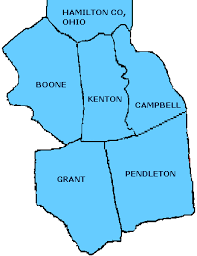
During 1839 James and Martha Dinsmore purchased 700 acres of land in Boone County and built Dinsmore House in 1842 along with several outbuildings. It is located on the Burlington Pike west of Burlington, Kentucky. The family raised sheep and grew grapes and willow trees for a basket-making business that was overseen by German immigrants. The house survives today and contains all of its original artifacts brought from in Cincinnati, Ohio, and Indians. The Dinsmore family resided in the home from 1842 to 1926. In 1987, the Dinsmore Homestead Foundation purchased the home along with 30 acres of land. A collection of some 90,000 pages of family letters, journals and business records have been preserved on microfilm for use at the Dinsmore Homestead.Get More Genealogy Real Estate
![]() | JOIN 8 Genealogy Websites |

| SPECIAL GENEALOGY OPPORTUNITY NOW for yourself and friends!
$7 (auto expires after 1-month) Try it out now to see if you can find your ancestors |
|

| SPECIAL GENEALOGY OPPORTUNITY NOW for yourself and friends!
$7 (auto expires after 1-month) Try it out now to see if you can find your ancestors |
|

| SPECIAL GENEALOGY OPPORTUNITY NOW for yourself and friends!
$7 (auto expires after 1-month) Try it out now to see if you can find your ancestors |
|

| SPECIAL GENEALOGY OPPORTUNITY NOW for yourself and friends!
$7 (auto expires after 1-month) Try it out now to see if you can find your ancestors |
|
During the time that families were venturing into Virginia, Kentucky and Ohio to take up land grants, Indians were marauding, raiding and taken white women as slaves. Yes! Throughout this region women and children disappeared never to be seen again. During the 1730s there was a movement along the wagon trail road leading out from Philadelphia as well as Wilderness Trail which led as far west as the falls of the Ohio River. The historians documented the career of Daniel Boone, however, other Boone families from Philadelphia also ventured out. The Boone famlilies had lots of children, and some of them were Quakers. They moved through Virginia and Kentucky with other relatives and friends. What I am saying is that Daniel Boone was not the only adventurer into Kentucky; a large movement was afoot. The reason: land grants.Get More Genealogy Real Estate
![]() | JOIN 8 Genealogy Websites |
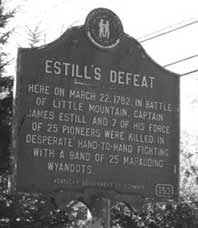
The Wyandot Indians raided Mt. Sterling on March 20, 1782 and a 14-year-old Jennie Gass was tomahawked and a former slave of Captain James Estill, Monk Estill, was captured. Captain Estill came to Estill's Station about 1779. This area is often called Fort Estill and a historical marker is posted near its location between Berea Road and the Blue Grass Army Depot fence. The Indians interrogated the slave and got an exaggerated version of the number of fighting men at Estills Station which convinced the Indians to put off an assault on the settlement. Two days later, Captain Estill and 26 settlers found the raiding party at Little Mountain near Mt. Sterling and attacked. Captain Estill was killed, and 13 of his fighters were killed or badly wounded. However, during the fight, Monk Estill managed to escape and carried with him one of the wounded white settlers back to the Estills Station. The distance was almost 25 miles. Monk Estill later distinguished himself as a maker of gunpowder and is thought to have mined saltpeter (potassium nitrate), a necessary component of black powder at Peyton Cave. Monk was married three times, and his wives bore 30 children. Later, the son of Captain Estill, Wallace Estill, emancipated Monk because of his service to the family. Although he was no longer their slave, the Estill family did not abandon Monk Estill in his old age. Wallace Estill provided for the former slave until his death in Madison County in 1835. Get More Genealogy Real Estate
![]() | JOIN 8 Genealogy Websites |
When American commerce was almost destroyed and American sailors were taken and forced to serve in the British navy, war was declared against Great Britain on June 18, 1812. When the call came for volunteers came to aid the regular army, the quota for Kentucky was 5,500 men, yet 7,000 strong turned out from the mountains and glens, field and farm, from every walk of life, to answer the cause of their country. When 1,500 men were required to join General Hull in his expedition against the savages in the Northwest, 2,000 answered the call, only to learn, after crossing the Ohio, that Hull had cowardly surrendered his army and the whole of Michigan territory to the British, despite the fact that his army numbered nearly double the enemy. For several months, at various times and places, the Kentucky troops did special and efficient service. In January of the succeeding year, Colonel Lewis with from 700 to 1,000 Kentuckians, marched against a combined force of British and Indians at French town on the river Raisin, and drove them from the village. Three days later, General Winchester was told that a large force of the enemy was en route to attack the victors. During a bitter cold night when the precaution of stationing pickets was neglected, early the next morning, 2,000 British and Indians under General Proctor suddenly attacked the camp. The Kentucky riflemen fought stubbornly for hours. Their ammunition ran low, but still they fought. Even when summoned to surrender they refused to lay down their guns until promised that their wounded would be safely guarded and humanely treated. History records how this promise on the part of Proctor was not kept, how the drunken Indians burned and tomahawked the helpless men and officers, until long afterward the rallying cry of the Kentuckians was, "Remember the river Raisin; Raisin and Revenge." At Fort Stephenson, 160 men under Colonel Croghan of Kentucky repulsed Proctor with nearly 4000. When General Isaac Shelby went at the head of the Kentuckians, all felt that he would lead them to victory. It is said that when Commodore Perry wrote, "We have met the enemy and they are ours," after his memorable victory on Lake Erie, that one hundred sharpshooters from Kentucky had aided in the capture. At the battle of the Thames nearly all the American troops were Kentuckians, and that gallant soldier, Colonel Richard M. Johnson, did noble service in the killing of the noted Tecumseh. When Jackson, barricaded behind cotton bales at New Orleans, defeated Pakenham with his veteran forces, more than one fifth of the American soldiers were Kentucky riflemen. Get More Genealogy Real Estate
![]() | JOIN 8 Genealogy Websites |
Old roads. It was free land, so why not? Whether or not they ever took it up is another question. That is where the deed records come in and such new information should send you forthwith to a search of that county's deeds. Also on the Tax Digests are other tracts of lands, names of waterways, names of adjoining neighbors, and (always) the county where the land was located. But wait, we are not finished. At the end of each district is a list of "defaulters". These are persons who did not pay their tax for that year. That could mean that the person died or left the county. Only the deed records in all of the counties where he owned land will provide further data. Remember, during the Indian removals, people were moving on. Get More Genealogy Real Estate
![]() | JOIN 8 Genealogy Websites |
When your genealogical research turns up zero, establishing facts for elusive ancestors is tough. One solution is to research around the facts and thus eliminate persons in that generation. We need to determine who is whoand prepare a family group sheet for that family irregardless of whether or not they are directly related. This process documents a family and eliminates them. First, locate your ancestor's surname in nearby counties and states. Then search court house records -- deeds, wills, tax records, estates, etc. and establish the facts for each person. Next, complete a family group sheet on that family, noting the sources you used. Proceed accordingly on all questionable families, thus identifying each person of the era and location. Third, examine each family group sheet. Look for nicknames. For example, Betsy, b. ca 1757 could be your Elizabeth, b. 1759. Fourth, once everyone is identified you probably have a number of loose persons for whom you need to discover more information. Try to trace that person so that he may be either identified or eliminated; use marriage records, estates, etc. In the earliest pioneering days the eldest son inherited the farm while others went into other acceptable occupations such as physicians, ministers, etc. This took them away from the home place. In other words, erase confusion by identifying and eliminating all families in prescribed areas having your same. Get More Genealogy Real Estate
![]() | JOIN 8 Genealogy Websites |
Get More Genealogy Real Estate
![]() | JOIN 8 Genealogy Websites |
The technology of the Internet moves civilization forward and is a blessing because it is where we discover forgotten members of the family and more about our past. And, it is a place to post important genealogy data. As time moves forward and more people share their family histories, the Internet will contain the most valuable documents on earth. All that we need to do is to continue to share and add our information (no matter how trivial) to lasting websites. Initially at the first onset of the user experience, there was a rush of family group sheets added from computer programs. However, most of those have been taken down. Therefore, it is important that we post our information on more than one website. All over the Nation there are public libraries with a surprising amount of file folders containing family genealogy. I have found that people are still donating some pretty interesting to libraries and archives. Hopefully, the data will be digitized on library websites. Actually, local libraries are beginning to write their own websites and (for now) contains only a small amount downloadable data (usually out-of-date books). How much genealogy will be digitized and preserved on the Internet is a question of budget. We should continue to be supportive with our genealogy donations and attend local libraries. I have personally gathered and preserved a great deal of genealogical data over the years and those books which I published are contained as databases on my genealogy websites, viz: Georgia Pioneers Kentucky Pioneers North Carolina Pioneers South Carolina Pioneers Southeastern Genealogy and Virginia Pioneers Get More Genealogy Real Estate
![]() | JOIN 8 Genealogy Websites |
The life of the Kentucky pioneer and backwoodsman was one of long and bitter struggle. His task was to hunt, clear the forest to plow, and to fight local Indian tribes. Small forts, or stations were established to help resolve local conflicts with the savages being driven from their hunting grounds. The pioneers were of necessity armed, and were their own soldiers. They built forts and fought under commanders which the community had chosen. The mode of warefare somewhat resembled that of the Indian, and was quite different than the old European-style of both sides queuing up in a field and shooting at one another. The early pioneers fought the enemy from ambush. There was no court system, thus, the backwoodsman was prompt to avenge a wrong. He was grimly stern back woodsman who loved his freedom, and easily swayed by stormy passions. The atrocities suffered at the hand of the Indians taught him to relaliate in kind, thus, in this way he was cruel an relentless towards his enemy. After hostilities with the Indians came to a close, development of towns in the mountains was slow, and the woods remained isolated and cut off. Not until the railroads spread their iron network through the mountains, tapping an almost inexhaustible coal veins and mineral deposits, did the frontiersmen emerge into the business of coal-mining.
![]() |
| 3000+ Traced Families |
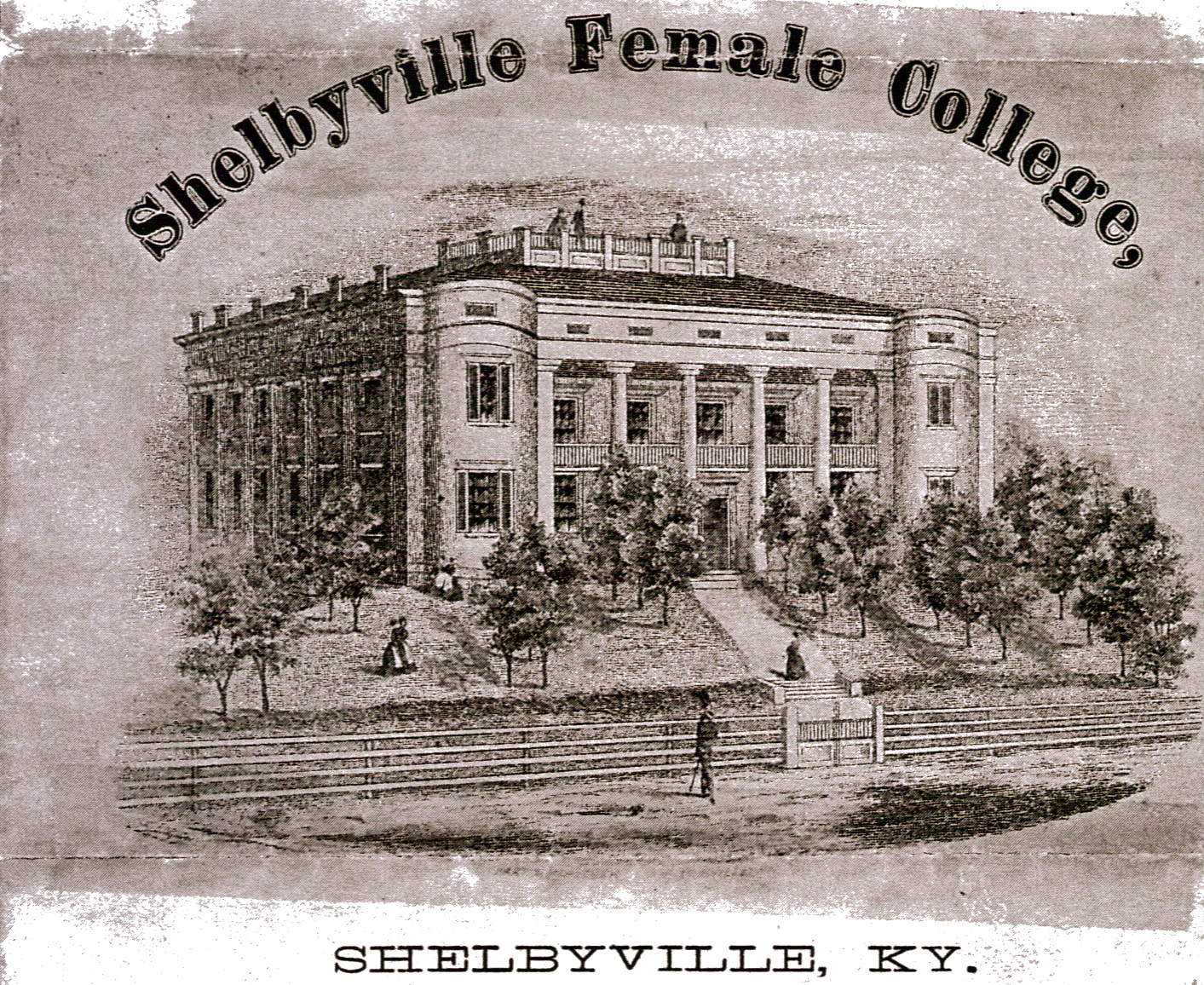
... more ...Shelby County was formedn 1792 and was named for Isaac Shelby, the first Governor of Kentucky. The county seat is Shelbyville.
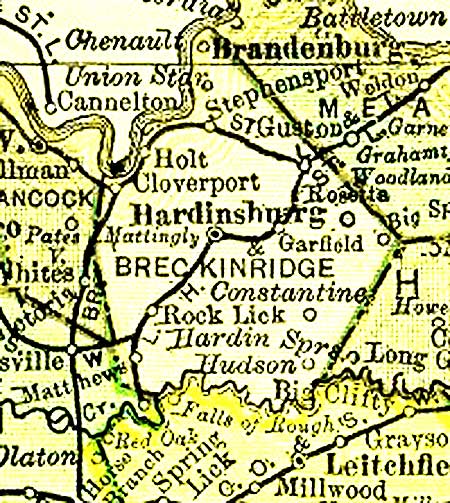
Genealogy Records available to members of Kentucky Pioneers
Indexes to Wills and EstatesWills and Estates Bk No. 1, 1792 to 1804
- Book No. 1, 1796 to 1804
- Book No. 2, 1804 to 1811
- Book No. 3, 1812 to 1817
- Bagel, William | Bell, Henry | Boling, William | Boyd, William | Boyles, David | Bozwell, George | Breedon, Richard | Brice, James | Brown, James | Buckhannon, William | Burzan, Jesse | Butler, Elizabeth
- Clarke, John | Connely, John | Daniel, Robert | Dornas, Oliver | Dunn, John | Elam, Richard | Felly, John | Ford, John | Fullinwider, William
- Garrett, John | Gazway, Richard | Glover, Jonah | Green, Catherine | Green, Jonathan
- Hansbrough, Marias | Hansel, Phillip | Hartman, Anthony | Hill, Hardy | Hogland, Richard |
- Jacobs, Thomas | Johnston, Phillip
- Lane, Lambert | Lasley, Robert | Laurence, David | Leatherman, John | Lemaster, Richard | Lewis, John
- McCampbell, Samuel | McCLain, Samuel | McClure, Daniel | McClure, John | Meeke, Jesse | Metcalf, James | Newland, Isaac | Newland, Jacob | Owen, Brackett | Owens, George
- Pennington, Isaac | Perkins, William | Potts, John | Powell, William | Prewitt, Michael Sr. | Redding, William | Reid, James | Robins, William
Get More Genealogy Real Estate
![]() | JOIN 8 Genealogy Websites |
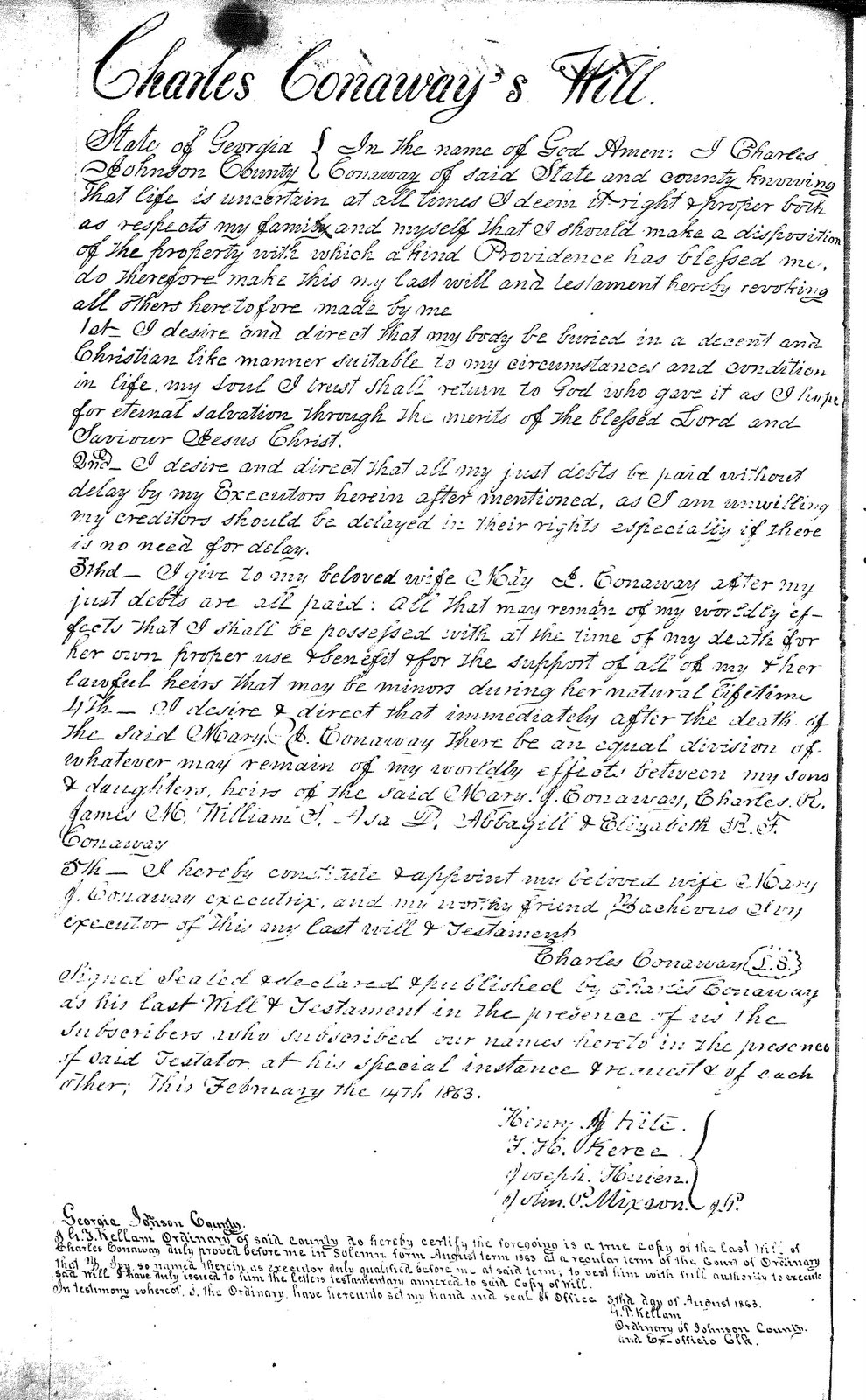
Even if a person dies intestate, you can still find the heirs. This is done by examining the annual returns for every year until the estate is closed. The first thing which happens is that an administrator is appointed who makes an inventory of the estate, has a sale to sell off the items and subsequently files a return every year thereafter to the probate county in the county which the person died. This return lists all disbursements ranging from funeral expenses to distributions to the heirs which may occur at any time over the period the estate is active. The heirs then give receipts, called vouchers. Examine the expenditures closely. Try to ascertain the identity of the payees. One easy method is a study of the census records for that county. Some of the heirs are husbands of daughters, so check out these names in the marriage records. Kentucky AncestorsGet More Genealogy Real Estate
![]() | JOIN 8 Genealogy Websites |